

AI makes it easier to create and distribute more. But winning attention requires the opposite of a “more is more” strategy.
Candidates encounter opportunities across job boards, search, social media, professional communities and increasingly AI-powered discovery tools. Employers can create job content and distribute campaigns faster than ever.
But more reach and more channels available to post job ads on, doesn’t automatically mean more attention from the right people.
For TA teams, the challenge is no longer simply getting a vacancy out there. It’s connecting three decisions: what you say, where you show up and what makes someone stop and take notice.
1. Make the opportunity worth finding
For many candidates, the journey still starts with search. 36% of job seekers search for an exact job title, which means clear titles, structured content and relevant language directly influence whether an opportunity gets found.
But being found is only the first step.
A job description needs to give someone a reason to keep reading. What makes this role relevant? Why this company? Why should someone consider making a move?
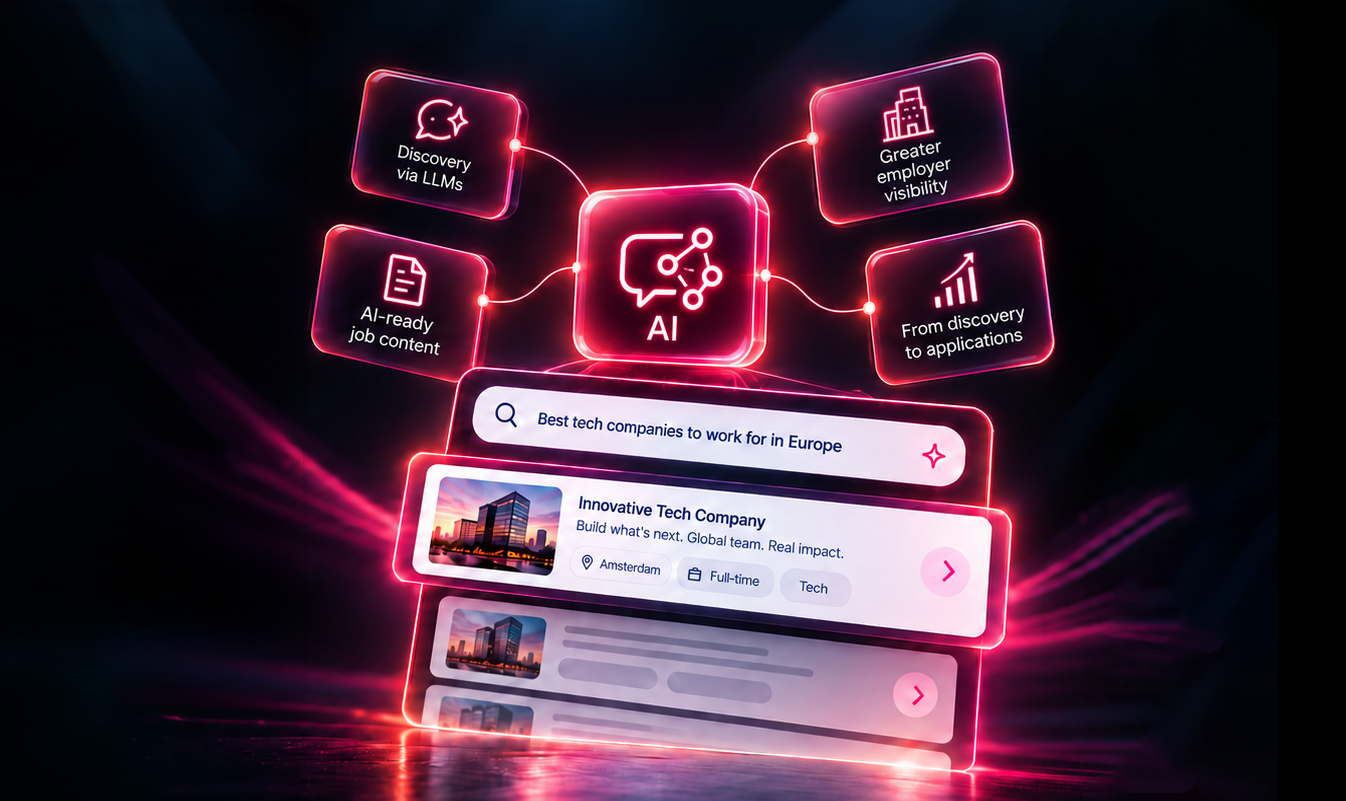
AI can help TA teams create consistent, audience-relevant content across roles, markets and languages. And as discovery expands beyond traditional search into AI-powered tools, the structure and clarity of that content will matter even more.
For TA teams, that means treating job content as part of the attraction strategy, not simply the information that sits behind a vacancy. Start with how candidates actually search, make the role and value proposition clear early, and create content that performs across both Search Engine Optimization (SEO) and Generative Engine Optimization (GEO). As candidates increasingly use AI to find and evaluate opportunities, clear structure, relevant language and meaningful detail become even more important.
The goal is to make every opportunity easier to discover, whether the candidate is searching on a job board, through Google or asking an AI tool to help find their next role.
2. Be where the right candidates are
Great content won’t perform if the right people never see it.
Job boards remain important, but they are only one part of the discovery journey. Recent research shows job seekers moving across general and niche job boards, professional networks, employer career sites, search engines, social media and, increasingly, AI platforms.
There is no single candidate journey anymore. And that makes distribution a strategic decision, not a publishing task.
Instead of asking “Where should we post this vacancy?”, TA teams need to ask:
“Where is this particular talent most likely to be reached, and which channels are actually performing?”
The answer will change by role, skill set, seniority, geography and audience. A channel that performs for software engineers in Germany may tell you very little about where to reach healthcare professionals in the UK or early-career talent in France.
That doesn’t mean narrowing distribution. In a fragmented market, reach still matters. Multiposting across relevant channels gives employers the coverage to meet candidates across different discovery journeys. The opportunity is to make that reach more intelligent.
Historical performance can help determine where a vacancy is most likely to perform and inform the initial media mix. Live campaign data can then show where applications are actually coming from, which channels are delivering and where the budget should move.
The shift is from distributing widely and hoping for the best, to distributing widely with a clearer view of what works.
3. Being seen is not the same as being noticed
Reaching the right audience creates visibility. It doesn’t guarantee attention or taking action.
75% of job seekers consider an employer’s brand before applying. Candidates need more than a well-written vacancy to decide whether an employer is worth exploring.
This is where employer storytelling becomes part of the attraction strategy.
Short-form video, imagery and authentic employee stories can make an opportunity more tangible. And always-on employer branding can build familiarity long before a specific vacancy gives someone a reason to act.
AI can help turn existing job and employer-brand content into channel-specific creative at greater speed. But speed shouldn’t come at the expense of distinctiveness. What matters is creating content that candidates recognise, remember and connect with.
One attraction engine, not three separate tactics
This is where the pieces come together.
Relevant content makes the opportunity worth finding. Intelligent and data-driven distribution puts it in front of the right people. Compelling creative makes it worth noticing.
Each plays an important role.
But their real impact comes from working together, turning visibility into attention and attention into applications.

That is the attraction engine.
And it represents an important shift in how TA teams should think about AI. If technology makes it possible to create more content, activate more channels and reach more people, the answer isn’t automatically to do more of everything.
The advantage comes from making better decisions about what to say, where to appear and how to earn attention from the people you actually want to reach.
Attention is only the first challenge
Winning attention gets the right candidates to see the opportunity. Converting that attention into an application gets them into the funnel.
What happens next is becoming just as important.
AI is making it easier for candidates to discover roles, research employers and prepare increasingly polished applications. As application volume grows, a CV alone may tell recruiters less about who genuinely has the skills and potential to succeed.
So once you’ve won attention, the question changes: How do you find the right signal in all that volume?
That brings us to the second of three priorities we explore in the VONQ View Autumn Edition as AI continues to reshape hiring.
The Autumn Edition of the VONQ View explores all three priorities shaping what comes next for TA: attracting the right talent, finding stronger signals and building trust into AI-supported hiring.